Showing posts with label regency England. Show all posts

4/24/23

Hello! Happy Spring to You!

 It's been a while since I posted to the blog -- my bad, but Spring sucks me out of the house, away from my PC and into the garden -- or what's left of it after a winter season has its way with it.  Add to that a ton of rain in the past week or so, and the poor thing is under 6 inches of water!  

Well, I'm taking a break for a bit from that project and back to working on "Lady Caro and the Count".  If you recall, I left Romancing the Rogue in a bit of a cliffhanger with Caro fainting at the sight of Julien Alphonse Roberge, the man who tried to win her away from her second husband, the Count Roberge back in the early 1800s (you can find more details about that in the first book of The Merry Widow series, Snowbound Seductions).  

Anyway, this romance will feature a country house party, a passel of young ladies seeking betrothals and Lady Caro and the Dowager Rutherford struggling to keep up with their new clients, Julien's nieces, and the Dowager's granddaughter.  It should be great fun -- at least, that's my plan!

In the meantime, why not sign up for my newsletter to keep in touch with my progress (if any) and special sales that I post from time to time?  Easy-peasy and I don't hammer you with a daily or weekly newsletter in your box -- that's my promise to you.  Actually, you'll be happy to hear from me once a month, unless I run those specials.  

Stay tuned for my next post where I'll include

some of my favorite historical romance authors in a

cute, easy to print bookmark.

HAPPY READING, MY FRIENDS!


10/20/20

The Hounds and Sheep of a Regency Romance -- Uh?

 Sometimes a writer just has to do some silly stuff.  Why?  Because as we create our stories the imp within demands some quality time, and because you want to pepper your story with believable facts that help embellish an historical romance with a degree of veracity.  

Several of my historical romances have these little streaks of humor and/or facts, so in Wicked Wagers I included a few odd but fun touches:  first, the Irish Water Spaniel.  In reading through one of the many issues of Country Living (the UK edition) I tend to hoard, I came across an article about this somewhat rare breed.  But, I must confess, it was the image of these wild and wooly hounds that made me want to incorporate them into the romance.


Pretty cute, uh?  These dogs are excellent retrievers for waterfowl, which was perfect for the area that WW is set -- on the west coast in the Whitehaven area, not far from the Lake District. 

How can you resist a dog that looks like this, I ask you?  And when I did some research on this breed, they indeed were being cultivated in Ireland in the first half of the nineteenth century, so it's feasible that Julia Montford, the heroine, could have been involved in breeding these hunting dogs.  According to the American Kennel Club, they are friendly, even a bit clownish.

And now to the sheep . . . .  Say hello to the Lincoln Longwool breed, first introduced in The Viscount and the Virgin, when the viscount struggles to rebuild his estates after his older brothers had almost destroyed them. 

According to Wikipedia, the Lincoln is the largest British sheep, developed specifically to produce the heaviest, longest and most lustrous fleece of any breed in the world.  The versatile fleece is in great demand for spinning, weaving and many other crafts, even to this day.  

Talk about having a bad hair day . . . ;-)  


And finally, the Herdwick sheep, brought to England during the Viking invasions over 600 years earlier.  This is a hardy breed perfect for the long, harsh winters in the mountainous area of the Lake District.  They've even been known to eat their own fleece to stay alive during long winters, if necessary. 


I decided to add them to WW because Ben's older brother, Charles, is now the squire and has a herd of 500 head of Herdwicks, common to the area.  Between Gabriel Montford and Charles Burton, these two characters are always "wagering" on their herds as they lay bets on Ben and Julia's courtship throughout the romance.  Must be a guy thing?


Well, so there you have it.  Hounds and sheep in a Regency romance.  Pretty exciting stuff, right?  Hey, writing is a very solitary life, so I guess I need to get out more . . .

"I suppose we are all getting to look mildly fictional -- "
E.B. White

HAPPY READING!


10/13/20

Who is Ben Burton?

This blog entry was suggested by one of my colleagues, Jo-Ann Roberts, who urged me to post something about the hero in Wicked Wagers, the second romance in The School for Sophistication series, which is due to go live on October 15.  After all, she wrote, "Readers want to know what the hero looks like!"  Okay, Jo-Ann -- this one's for you!

Here is how I imagine Benjamin Malory Burton to look -- he's tall, rugged, has honey-gold hair, deep blue eyes and a set of lips that makes my heroine, Julia Montford, swoon time and time again.  Some of you may recognize the actor, James Norton, best known for his starring role in the British TV mystery series, Grantchester.  As I scoured the images on Google and Pinterest, I kept returning to Norton.  I've never watched the series (my bad!), but there was something about Norton that rang true for a former British Cavalry officer from the Napoleonic Wars.  And when I stumbled on this image, I was convinced I'd found Ben Burton.

Can't you picture Norton in the formal black-and-white evening wear of the Regency period -- substitute the bow tie for a silk cravat, right?  Breeches and Hessian boots?  You bet! 

The character of Ben is somewhat gentle for all his height and muscular build.  He's a tease, loves his little nephews and is willing to work with his hands to repair a dilapidated hunting lodge.  In other words, a man who is willing to work to build a future for himself and the woman he loves. 


But he's also a man with a plan and his determination to woo and wed Julia pushes him beyond his normal rough-and-ready demeanor.  Nothing, however, goes smoothly in the course of seduction, and yet Ben is willing to turn to Lady Caro and the Dowager for their help in learning a little sophistication.
 
And that's what makes him a hero, in my mind. 


You can order Wicked Wagers here (more vendor links are still loading, such as Barnes and Noble, and is also available for pre-order on Amazon here.   
 
And if you haven't read the first book in The School for Sophistication series, The Viscount and the Virgin, you can find the ebook vendors here.  
 
 
"The unread story is not a story; it is little black marks on wood pulp.
The reader, reading it, makes it live: a live thing, a story."

Ursula K. Le Guin

 
HAPPY READING!
 
Claire H.


10/15/19

Cover Reveal


Officially releasing Thursday, October 17!
 
This is the first novel in my new regency series -- "The School for Sophistication" -- featuring the intrepid Lady Caro, who featured throughout the Merry Widow series.  Now widowed a third time (God, she can't marry and kill off another innocent man again), she's determined to find an occupation to keep her sanity.  Miss Abigail Prescott of Boston is her first "test" pupil, and Viscount Montford is in for several surprises, most of which involve the violet-eyed redhead from Boston.
 
All links will be posted on Thursday -- preorders available
on Apple iBooks and Barnes & Noble at this time.


1/22/19

Mid-Winter Freebie!

Gosh, it is cold here in New England and we're under at least 4-5 inches of ice and snow.  Spent most of Sunday, yesterday and this morning trying to "dig" through solid ice.

Not fun.  

Actually, damn depressing.

So no Tea & a Title today -- my apologies; but I have a gift to make it up to you - just click on the image to get to the participating vendor links!


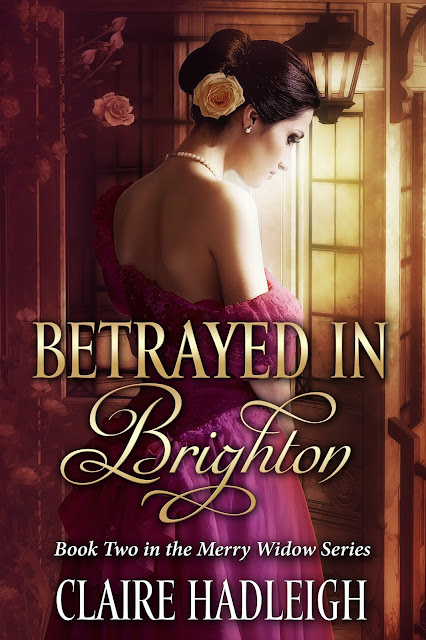
Betrayed in Brighton is the second romance in The Merry Widow series and features the fiery Lady Alexandra and the lusty, handsome Major Pendleton.  This romance starts off somewhat on the grim side because Alexandra made a poor choice in putting off the good Major's offer of marriage.

Tsk, tsk . . . because, on the eve of the Battle of Waterloo, he's MIA, leaving Alexandra in a state of heartache and frustration as she believes he's still alive despite all factors pointing to the opposite.

Hope you enjoy Betrayed in Brighton --  I loved writing it and love this passionate, sensuous pair of lovers!

2/13/18

Final Days of Freebie Ebook!

A special for Valentine's Day --  Passionate Persuasions is now FREE at the following sites:   Apple iBooks, Barnes & Noble Nook, Kobo and other international distributors.  [Apologies to Kindle users -- Amazon does not allow a freebie unless it's under the KDP Select program].

And, of course, your honest review is most welcome!  

10/12/17

Images that Inspire

One of the problems I faced when starting Book #3 in the Merry Widow series was how my hero, Chandler Rhys, evolves from a somewhat quiet, scholarly type as portrayed in the second book (he was introduced in Betrayed in Brighton as a secondary character) into a man more passionate about the heroine, Felicity Drummond.  Still keeping the light-hearted spirit of the holiday season, what could be the inciting incident that ignites that passion?

Jealousy was a good starting point, I thought.  But I needed something quick, right up front at the beginning of the story (since this is a novella, the timing is much tighter than in a full-length novel).

Felicity is assertive in her own way and quite sensuous in nature.  As a matter of fact, in the second book, her somewhat forward manner throws Rhys for a loop.  So I started looking at classic paintings from this period, but also other images that might capture the "feeling" of what could set off Rhys' jealous bones, as well as capture Felicity's teasing, sensuous nature.

I've always loved the work of Alphonse Mucha (late 19th-century) and this image of his Job cigarettes poster made me think of Felicity --


Certainly the hair was a factor, her heavy waves of deep red hair, but it was that "come hither" look that made me chuckle.  This was a bit over the edge, but it worked for me.  Then I turned to Ingres' painting of the Odalisque --


Ingres painted this in 1814, near enough to the timing of my story (1816), so I took this idea and image and ran with it.  I think you can guess where I'm going with this and soon I'll share an excerpt.

Who was Jean Auguste Dominique Ingres (August 29, 1780 - January 14, 1867)?  Ingres was a French Neoclassical painter, and although he considered himself a painter of history in the tradition of Nicolas Poussin and Jacques-Louis David, by the end of his life it was his portraits, both painted and drawn, that were recognized as his greatest legacy.


Is it my imagination or does this woman seem to hold a secret?  Her look reminds one of the Mona Lisa -- that hint of a smile, the quiet gaze almost intimidating in its sense of assuredness.

This is what intrigues me about writing historical fiction -- the ability to use actual incidents, fashions, trends and manners of an era, to build a world for the reader and sometimes to use as trigger points in the plot or characterization.

Stay tuned for "Captive for Christmas" -- Book 3 in the Merry Widow series, -- due out in mid-November!  Why not sign up for my newsletters for further news and other fun things?


9/25/17

The Scoop on Widows:

 Readers have asked me, "Why do you write about widows, especially in a romance?"  
I chose to focus my Regency novella series, The Merry Widows, on young widows for several reasons. As opposed to a young miss who is seemingly (or truly) innocent and ignorant about love and sex, a widow has probably experienced these aspects of love and marriage. Notice I wrote "probably". There were many arranged marriages in those days, but putting marriage and sexual relations aside for a moment, a widow offers the writer an opportunity to explore a nuanced life -- multiple layers of experience, whether happy or sad or tragic, a more complex character who knows her own mind more at 30+ years of age than when she was a mere girl of 18 years or so. This opens up a vast field to play in, from the writer's perspective, especially in terms of the growing relationship with the hero. 


Now the play of seduction can go both ways. One of the most lusty widows in literary history is Chaucer's Wife of Bath. She was not shy; she was bawdy and full of life. She had survived some hard knocks, only to come back fighting. And she grew powerful and rich through taking over her first husband's position in the merchant's guild, a growing phenomenon for merchant women in the Middle Ages. The other two examples of the expansion of power for women at that time was the lady of the manor, who usually ran the castle in her husband's absence in the Holy Wars. Not all, but certainly quite a few. Author Maureen Ash creates a medieval mystery series, which features a strong Lady of the Manor and a retired Knight Templar. The third example would be women in the religious field. In a convent or abbey, women could learn to read, write, transcribe and illuminate manuscripts, as well as learn medicinal practices and such. A wonderful series of medieval mysteries was penned by Margaret Frazer in the 1990s and early 2000s. Sadly she died a few years ago, but her Dame Frevisse series lives on.


 Which leads to my next reason to work with widows as heroines. Sometimes a widow retained power and wealth if her husband died and had left all or part of his estate and holdings to her and his heirs. But if there were no heirs and no male relations to step in and take control -- well, the good woman could benefit and thrive.  As in the case of two of my characters, this was their experience. With land and money, there is little pressure to marry again -- except for love and children, perhaps. Society on both sides of the Channel was much more open to passion and a lust for life at this time. as the Regency years of England occurred within the larger framework of the Romantic Era, a time that encouraged a much more emotional reaction to life and nature -- Beethoven, Wordsworth, Percy Shelley, Mary Shelley, Lady Caro Lamb and Lord Byron, J. M. W Turner, are just a few of the most emblematic of the Romantics. 


And finally, a series based around young widows seemed natural in light of the period -- England had been embedded in wars for many years -- the War of 1812; the Napoleonic Wars and the subsequent Hundred Days War when Napoleon escaped Elba and marched on Paris. During the Battle of Waterloo, over15,000 British soldiers died or were maimed. So between the Army and the Navy, how many women lost their husbands?  One would think there would have been a significant increase in the number of widows during those years.

Nuance, texture, scope. Widows as heroines make a fine mixture for a romance novel. They seek affection, companionship, sexual relations and marriage just as single women do; if childless, they hope for babes of their own. And maybe readers who are a bit tired of the 20-something virgins might find that the experienced widow adds more depth to the novel, as well as a more satisfying HEA -- at least, that is my hope.

Stay tuned for an excerpt from the upcoming third novella of the series, due to release mid-November!  Why not sign up for my newsletter here? 

6/4/17

Book Birthday!

Book Two just released on June 1st!  Amazingly, I made my deadline as planned, and now hope to relax for the summer months before beginning Book Three in the Merry Widow series.

Click here to order and I hope you enjoy the story (Psst -- reviews are always welcome, too!)

4/5/17

Swimming in Brighton

As I work on the first draft of Betrayed in Brighton, I find I'm enjoying the research into the history of Brighton as a popular seaside resort for the Regency period of England. Think Cape Cod, early 1800s!

Because of the oppressive heat wave in London during the Season, my characters will head to the shore and enjoy the restorative powers of sea bathing, fresh air and sunshine. The more I read about people bathing for medicinal reasons, the more intrigued I become. Numerous writers refer to this popular phenomenon, which became the thing to do in the mid-1700s.

Brighton, late 1700s  (bathing huts heading into the sea)

ca. 1829 - Dippers are on the left; lady preparing to undress; other women frolicing


Jane Austen, Fanney Burney and even the Prince Regent went bathing in Brighton's chilly waters, usually guided by "dippers," men and women who aided their forays into the salty waters of the English Channel --

Franny Burney, August 1773
“Ever since I went to Torbay, I have been tormented with a dreadful cold and very much advised to sea bathing in order to harden me…. I was terribly frightened, and really thought I should never have recovered from the plunge. I had not breath enough to speak for a minute or two, the shock was beyond expression; but after I got back to the [bathing] machine, I presently felt myself in a glow that was delightful – it is the finest feeling in the world, and will induce me to bathe as often as will be safe.“


Jane Austen to her sister, Cassandra, September 1804
“…I continue quite well, in proof of which I have bathed again this morning.  It was absolutely necessary that I should have the little fever and indisposition, which I had;–it has been all the fashion this week in Lyme…”

But one of the big questions that keeps arising is: did women bath or swim naked?  Apparently, there was a law passed against naked bathing/swimming later in the Victorian era; however, there's evidence that women (or some women) preferred to swim naked rather than wear the awkward flannel shifts we see in the above graphic by Thomas Rowlandson.

Rowlandson's version of naked swimming
There have been several fictional variations on this question -- Rosalind Laker's Sugar Pavilion (1993) has her heroine swimming naked in the early morning hours before the crowds come.  Jennifer McQuiston's Summer is for Lovers (2013) also has her heroine doing likewise. One of Marion Chesney's regency romances, Beatrice goes to Brighton (1991) has her hero strutting around in the buff in plain sight of the women. The predominant evidence seems to point to both ways as acceptable. Certainly the men could swim/ bath naked; the ladies seem to go either way.


Of course, this lady has the right idea -- use a telescope or spyglass to view the naked men. Smart lady!  


4/3/17

Book #2 in the Merry Widow series

http://clairehadleigh.blogspot.com/p/my-books.html

I'm so excited by this beautiful cover for the next ebook in my Merry Widow series, which takes place in Brighton, England in the early summer of 1816!  The cover designer is Melody Simmons, who creates amazing covers for both ebooks and print.

Book #1, Snowbound Seductions, had a lighter, merrier tone as it was set during the Holiday season, 1814, and featured the growing love between Meredith Lambert and William Burnham, the Duke of Huntington. This story focuses on the Duke's sister, another young widow, Lady Alexandra Chase, and Major Fergus Pendleton. Theirs was more a romp than serious, in the first story, or at least that's how Lady Alexandra viewed it. But the good major was serious about marriage.

But then Napoleon rears his head once again in March, 1815. Life is like that, isn't it? Just when you thought it was safe to jump back into life, bam!  So this is where Book #2 begins.  A bit more angst, a bit more suspense.

Sometimes one just has to up the ante, don't you think?  I plan to release Book #2 in late May/early June, so please check back frequently -- and I'll be posting excerpts and such between now and then. Or you can follow me on my Facebook page for quick updates!


12/4/16

New Book:

Pre-Order a Regency Holiday Romance!
Release date:  12/16/16

William Rhys Burnham, the Duke of Huntington, handsome, wealthy and a confirmed bachelor, requires peace and quiet for the holidays at his ancestral estate, Huntington Ridge.

But his sister and friends, all widows, are tired of peace and quiet. They're desperate for all the festivities and lusty frolics of the Christmas season!  How can they prevail against the Duke's demands?  One simple ingredient: they have a secret weapon and aren't afraid to use her -- the beautiful Meredith Lambert, his old childhood friend, who's back in England after a ten-year hiatus on the Continent. 

Can she win him over to their plans? But, more important, can she hold off his amorous seductions? And does she even want to? Join the fun as Huntington Ridge is invaded by passionate women, cranky relatives, quirky neighbors, a dashing Major, a lovelorn vicar -- and a snowstorm like no one has seen in years!

Snowbound Seductions is the first in The Merry Widow series, soon to be followed in summer 2017, by Betrayed in Brighton!

https://itunes.apple.com/us/book/snowbound-seductions/id1180471492?mt=11

http://www.barnesandnoble.com/w/snowbound-seductions-claire-hadleigh/1125246099?ean=2940153523651

https://www.kobo.com/us/en/ebook/snowbound-seductions

More ebook stores - CLICK HERE

11/2/16

Mood Boards to Write:

Sometimes the writer hits that brick wall where nothing seems to inspire, the words don't come as easily -- or not at all.

Scary stuff. What does one do?

Give up? Never -- or at least, maybe for a while. I'll be the first to admit it. If the blank screen or white page is staring me in the face with that "go ahead, I dare you" attitude, I throw up my hands and walk away.

Walking is good. It clears the head of all the extraneous crap, allowing fresh ideas and thoughts to emerge. Creating something with your hands or digitally helps also. I like to fiddle with Photoshop and Paintshop, altering images, enhancing, embellishing until something unique evolves.

These are my two mood boards to help me get past the "great swampy middle," as Joe Butcher phrased it. I'm mired in revising and editing, and everything seems stale at this point. I realize what it is, but it doesn't make it any easier to deal with.

So today was a "play" day for me. No writing except for this blog. This first mood board symbolizes my heroine, Meredith Lambert, a young woman just returned to Regency England after a long hiatus in southern France with her mother and step-father. She is elegant, beautiful, smart and terribly in love with the hero, her old childhood friend, William Burnham, now the Marquis of Huntington. After almost ten years, they meet for the first time only to end up arguing like they were children again.


And this board is for William Burnham, the Marquis -- a confirmed bachelor, self-centered, experienced in war, a financial wizard. Tall, dark and handsome, of course.There are secondary characters as well -- all widows and still young enough to want more out of life, especially fun and passion during the holiday season -- much to Burnham's chagrin.


Well, let's hope this dead-in-the-water phase dissipates soon. My deadline for release is December 1st, so I'd better get cracking!  I think I'll start with a fresh scene -- the love scene between Meredith and William. That usually gets the blood stirring -- hmmmm!

Here's a sneak peak at the ebook cover -- I hope it intrigues you!  If I can move onto the final revisions soon, I'll post an excerpt for you to read.


Hellow August...catch these freebies!

      Yup, it's August and the weeks are winding down.  Soon back to school shopping will begin and before we know it -- poof!  It's...